
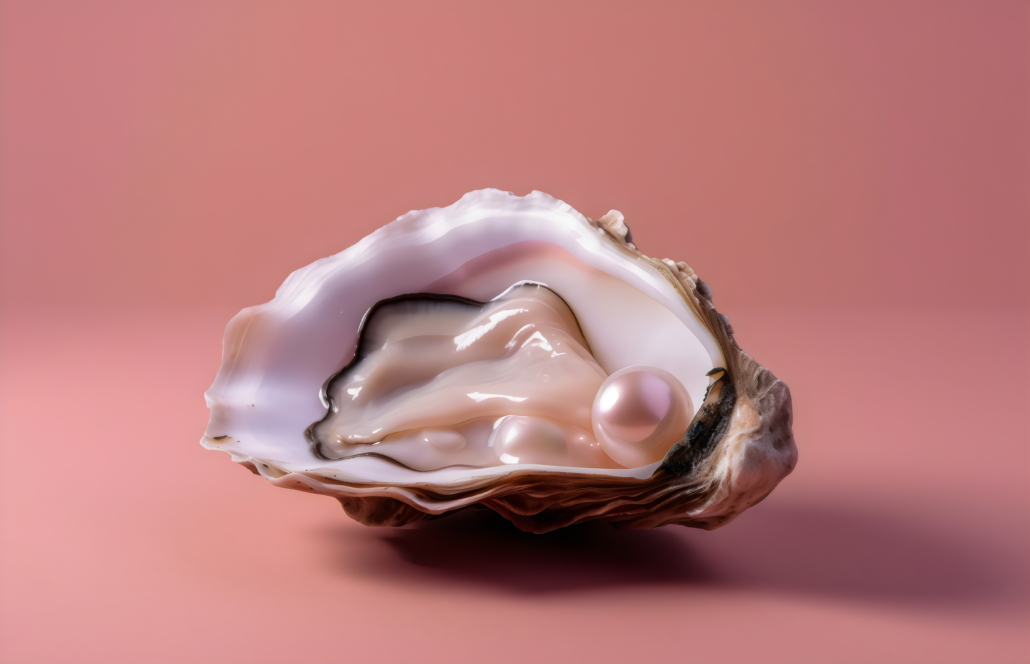
Humans have been enjoying the powerhouse health benefits of oysters for millennia. In addition to their nutrient-rich composition, oysters are a famous aphrodisiac.
Rumored to boost libido and improve performance, oysters are also a fertility superfood that supports reproductive health from passion and performance through development. Key to the libido and fertility boosting benefit of oysters are their abundance of trace minerals, which help regulate the endocrine system and production of hormones that drive passion. [1]
In this article, we’ll dive into the critical nutrients behind these briny mollusks and the storied link between oysters and sex drive.
Oysters and Their Role in the Wild
Oysters are plump, briny bivalves that live in shallow coastal seabeds. They feed by filtering algae from the water.
A single oyster can filter up to 50 gallons of water a day, making them an important biofilter by removing excess nitrogen and phosphorus from coastal habitats.
Not only are oysters good for the environment, they are also rich in micronutrients and trace minerals that are essential for a healthy sex drive and overall well-being. [2] [3]

Oyster Lore

Archaeological research tells us that oysters have been consumed by humans as far back as 164,000 years ago. Another study suggests that indigenous oyster fisheries were around for at least 6,000 years before the colonization of the Americas. [4]
These bivalves have been providing essential nutrients to our species for ages, though their association as an aphrodisiac is from Western antiquity.
One of the earliest references to oysters was in Ancient Greek literature, such as the poet Matron, who wrote satirical poems about aristocrats and their opulent dining habits.
He poked fun at their dinner parties, snarkily referencing their affinity for oysters and bone marrow. But from a nutritional standpoint, there’s really nothing to make fun of.
The word aphrodisiac is derived from the Greek goddess of love, Aphrodite. In mythology, Aphrodite emerged from the sea on an oyster shell, thus linking this shellfish with aphrodisiacs ever since.
Then there’s the infamous 18th-century playboy Giancarlo Casanova, who claimed to eat 50 oysters for breakfast every day, attributing his legendary libido to their aphrodisiac properties.

But what’s the science behind this mythic connection? Let’s dig into the facts.
Oyster Nutrient Composition
Oysters are a true superfood containing critical minerals and micronutrients that support optimal health, including:
- Vitamin D – Essential for maintaining a healthy immune system and promoting growth in conjunction with vitamin K and calcium.
- Vitamin B12 – One of the most important B vitamins, vitamin B12 is essential for cellular energy production and is only found in animal products. [5]
- Selenium – A trace mineral that is stored in the thyroid gland and muscle tissue. Essential to the formation of DNA and contains strong antioxidant properties that protect cells against free radicals. [6]
- Iron – Essential mineral for carrying oxygen throughout the body, regulating immunity, and maintaining healthy metabolic function. [7]
- Zinc – An essential mineral that plays a critical role in physiology, from immunity to bone health. [8]
- Phosphorus – The most abundant nutrient in the body next to calcium, phosphorus is mostly present in the bones and teeth but in smaller amounts. It helps to filter out waste in the kidneys and is essential to energy storage in the body. [9]
Oysters are also a low-calorie, high-protein shellfish that can be a game-changer for micronutrient deficiency, a massive global health issue affecting nearly 2 billion people. [10] [11]
While a 3.5-ounce serving contains only 68 calories, it provides over 75% of your RDV for vitamin D and selenium and well over 100% of your RDV for B12, zinc, and copper.
Now let’s take a closer look at how this shellfish can boost your sex drive and tonify your reproductive system.
The Aphrodisiac Properties of Oysters
Oysters play a vital role when it comes to reproductive health. We’ll break down the most important links between this salty delicacy and our reproductive system.
Zinc, Testosterone, and Sperm Quality
Oysters are one of the world’s most significant sources of zinc, which is shown to increase testosterone levels in the body.
Zinc is also a powerful antioxidant that helps reduce both inflammation and oxidative stress in the body. [12] [13] These anti-inflammatory properties are crucial because inflammation has been shown to significantly reduce sex drive and cause sexual dysfunction in both men and women. [14] [15] [16]
Furthermore, our sex drive is closely linked with the regulated production of our sex hormones, including estrogen or testosterone. Zinc is a proven hormone balancer and functions as an antibacterial agent in men’s urea system, supporting the healthy production and quality of sperm. [17]
Furthermore, zinc deficiency has been linked to low testosterone. Maintaining a healthy amount of zinc in our diet not only supports the endocrine system but is promotes a healthy libido on a cellular level. [18]
It’s also worth noting that men lose between 1 and 3 milligrams of zinc every time they, uh, crack an oyster. So not only do oysters boost sexual function, they also make up for the nutrients expended in passion.
Anti-inflammatory Omega-3 Fatty Acids
Oysters are one of the richest sources of omega-3 fatty acids, which aid in heart health and reduce inflammation in the body, thus reducing the risk of chronic disease.
Omega fatty acids are associated with an increased probability of natural conception in women and improve embryo quality and implantation for those undergoing IVF. [19] [20]
Fatty acids are also critical building blocks of fetal brain and neurodevelopment during pregnancy, lactation, and early childhood growth. [21]
The Bottom Line
Oysters have been a prized part of the human diet for tens of thousands of years. But it wasn’t until their association with the Greek goddess Aphrodite that they were widely revered as an aphrodisiac.
But the sex-drive-boosting reputation of oysters is backed up by modern nutritional science.
Oysters as aphrodisiacs transcend the mythic when we examine the effects of their abundant zinc, B12, and omega-3 fatty acids.
This tiny bivalve has the power to reduce inflammation, boost sperm count, and regulate the production of the hormones that fuel sex drive and performance.
Article Sources
- 1. Alves J, Barrientos G, Toro V, Grijota FJ, Muñoz D, Maynar M. Correlations between Basal Trace Minerals and Hormones in Middle and Long-Distance High-Level Male Runners. Int J Environ Res Public Health. 2020 Dec 17;17(24):9473. doi: 10.3390/ijerph17249473.
- 2. Maurya, Neelesh. (2021). Nutraceutical potential of Oyster. 10.37591/RRJoFST.
- 3. Bianchi, M., Hallström, E., Parker, R.W.R. et al. Assessing seafood nutritional diversity together with climate impacts informs more comprehensive dietary advice. Commun Earth Environ 3, 188 (2022)
- 4. Reeder-Myers L, Braje TJ, Hofman CA, Elliott Smith EA, Garland CJ, Grone M, Hadden CS, Hatch M, Hunt T, Kelley A, LeFebvre MJ, Lockman M, McKechnie I, McNiven IJ, Newsom B, Pluckhahn T, Sanchez G, Schwadron M, Smith KY, Smith T, Spiess A, Tayac G, Thompson
- 5. O'Leary F, Samman S. Vitamin B12 in health and disease. Nutrients. 2010 Mar;2(3):299-316. doi: 10.3390/nu2030299. Epub 2010 Mar 5. PMID: 22254022; PMCID: PMC3257642.
- 6. Selenium
- 7. Piskin E, Cianciosi D, Gulec S, Tomas M, Capanoglu E. Iron Absorption: Factors, Limitations, and Improvement Methods. ACS Omega. 2022 Jun 10;7(24):20441-20456. doi: 10.1021/acsomega.2c01833. PMID: 35755397; PMCID: PMC9219084.
- 8, 12. Prasad AS. Zinc is an Antioxidant and Anti-Inflammatory Agent: Its Role in Human Health. Front Nutr. 2014 Sep 1;1:14. doi: 10.3389/fnut.2014.00014. PMID: 25988117; PMCID: PMC4429650.
- 9. Phosphorus
- 10. Kiani AK, Dhuli K, Donato K, Aquilanti B, Velluti V, Matera G, Iaconelli A, Connelly ST, Bellinato F, Gisondi P, Bertelli M. Main nutritional deficiencies. J Prev Med Hyg. 2022 Oct 17;63(2 Suppl 3):E93-E101. doi: 10.15167/2421-4248/jpmh2022.63.2S3.2752. PM
- 11. Lopes SO, Abrantes LCS, Azevedo FM, Morais NS, Morais DC, Gonçalves VSS, Fontes EAF, Franceschini SDCC, Priore SE. Food Insecurity and Micronutrient Deficiency in Adults: A Systematic Review and Meta-Analysis. Nutrients. 2023 Feb 21;15(5):1074. doi: 10.339
- 13. Te L, Liu J, Ma J, Wang S. Correlation between serum zinc and testosterone: A systematic review. J Trace Elem Med Biol. 2023 Mar;76:127124. doi: 10.1016/j.jtemb.2022.127124. Epub 2022 Dec 23. PMID: 36577241.
- 14. Clephane K, Wilson MC, Craig AN, Heiman JR, Lorenz TK. Inflammation Predicts Sexual Arousability in Healthy Women. Compr Psychoneuroendocrinol. 2021 Nov;8:100086. doi: 10.1016/j.cpnec.2021.100086. Epub 2021 Oct 16. PMID: 35669911; PMCID: PMC9165647.
- 15. Lorenz TK. Interactions between inflammation and female sexual desire and arousal function. Curr Sex Health Rep. 2019 Dec;11(4):287-299. doi: 10.1007/s11930-019-00218-7. Epub 2019 Oct 28. PMID: 33312080; PMCID: PMC7731354.
- 16. Ruan Z, Xie X, Yu H, Liu R, Jing W, Lu T. Association between dietary inflammation and erectile dysfunction among US adults: A cross-sectional analysis of the National Health and Nutrition Examination Survey 2001-2004. Front Nutr. 2022 Nov 11;9:930272. doi
- 17. Fallah A, Mohammad-Hasani A, Colagar AH. Zinc is an Essential Element for Male Fertility: A Review of Zn Roles in Men's Health, Germination, Sperm Quality, and Fertilization. J Reprod Infertil. 2018 Apr-Jun;19(2):69-81. PMID: 30009140; PMCID: PMC6010824.
- 18. Leila Mazaheri Nia, Mina Iravani, Parvin Abedi & Bahman Cheraghian (2021) Effect of Zinc on Testosterone Levels and Sexual Function of Postmenopausal Women: A Randomized Controlled Trial, Journal of Sex & Marital Therapy, 47:8, 804-813, DOI: 10.1080/009262
- 19. Stanhiser J, Jukic AMZ, McConnaughey DR, Steiner AZ. Omega-3 fatty acid supplementation and fecundability. Hum Reprod. 2022 May 3;37(5):1037-1046. doi: 10.1093/humrep/deac027. PMID: 35147198; PMCID: PMC9308390.
- 20. Omega-3 fatty acid supplementation and fecundability
- 21. Coletta JM, Bell SJ, Roman AS. Omega-3 Fatty acids and pregnancy. Rev Obstet Gynecol. 2010 Fall;3(4):163-71. PMID: 21364848; PMCID: PMC3046737.