
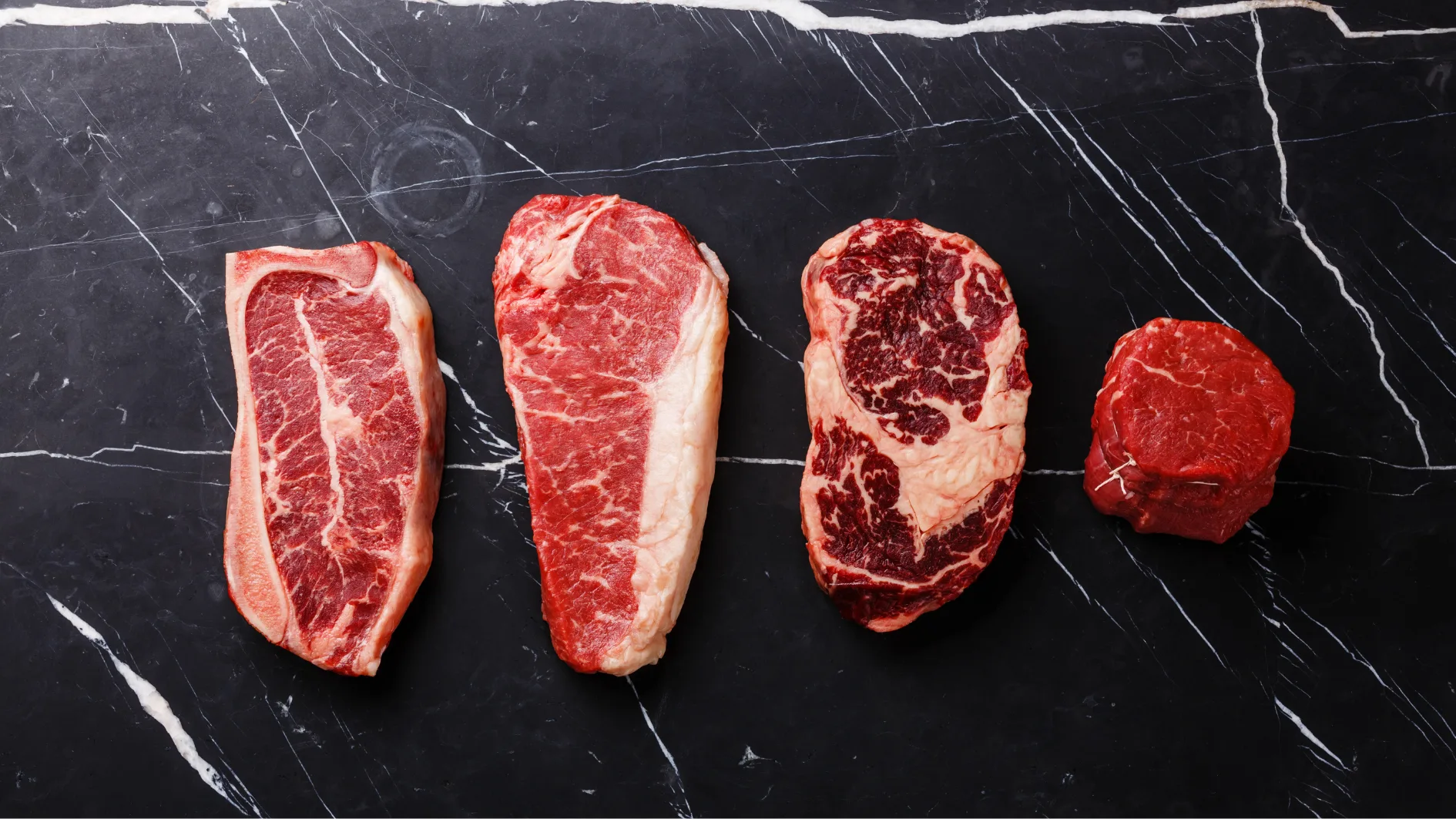
For centuries, nutrient-dense animal fats have provided the essential building blocks for human health, energy, and cellular function. When you select a steak, the fat content is not an afterthought. It is the primary indicator of flavor, tenderness, and biological quality.
To choose the most nourishing and flavorful cuts, learning to read marbling is key. Here is a guide to the science behind marbling and how to identify high-quality steak every time.
What Is Marbling and Why Does It Matter?
Marbling refers to the visible white flecks and streaks of intramuscular fat interspersed within the lean muscle tissue of beef. It is distinctly different from the solid layer of fat running along the outer edge of a cut, known as the fat cap.
To understand fat quality, it helps to distinguish between the two primary types of fat found on a steak:
- Intramuscular fat (marbling): These are the small, delicate flecks distributed within the muscle tissue itself. During cooking, this fat gently melts into the muscle fibers, resulting in a soft, tender texture and a deep, rich flavor. Intramuscular fat is also the primary metric official graders use to determine the USDA quality tier.
- Extramuscular fat (fat cap): This is the thick, solid layer of fat running along the outside edge of the cut. While it does not render directly into the inner muscle fibers in the same way, it plays a vital role during cooking by insulating the meat, helping it retain moisture and heat evenly. Unlike marbling, the fat cap can easily be trimmed if desired without compromising the tenderness of the steak.
From a biological perspective, intramuscular fat consists primarily of beneficial monounsaturated and saturated fatty acids. As these lipids melt into the meat during cooking, they deliver fat-soluble vitamins A, D, E, and K alongside steady caloric energy for cellular repair.
3 Key Rules for Identifying Quality Marbling
When inspecting steaks at the butcher counter or grocery store, keep these visual markers in mind.
1. Flecks Over Thick Veins
High-quality marbling resembles a fine, web-like pattern of tiny white flecks distributed evenly throughout the meat. Avoid steaks with thick, tough seams of fat cutting through the middle of the muscle. These will not render down properly during cooking and can result in chewy portions.
2. High Contrast and Bright Color
Look for bright white to creamy-colored fat set against deep, rich red muscle tissue. Yellowish fat can indicate older animals or specific forage diets, while dull gray-toned meat often signals improper storage or oxidation.
3. Uniform Density Across the Cut
The best cuts display consistent flecking from edge to edge. Ribeye, New York strip, and flat iron steaks naturally feature higher concentrations of marbling due to the specific work functions of those muscle groups.
Understanding Official Grading Standards
The USDA (United States Department of Agriculture) grades beef primarily on the degree of marbling and the maturity of the animal. Knowing these tiers makes identifying quality effortless.
- Prime: The gold standard. Prime beef features abundant, intricate marbling. It offers maximum juiciness, flavor, and nourishing dietary fats.
- Choice: Contains a moderate amount of marbling. Choice cuts remain tender and flavorful, especially when prepared with gentle, moisture-retaining cooking methods.
- Select: Leaner with minimal marbling. While lower in fat, it generally lacks the tenderness and deep, satisfying richness of Prime or Choice cuts.
The Benefits of Nutrient-Dense Marbled Meat
Contrary to decades of outdated dietary guidelines, the natural saturated and monounsaturated fats found in marbled beef are vital for human physiological function.
- Hormonal balance: Cholesterol and saturated fats serve as core biochemical precursors for steroid hormones, including estrogen, progesterone, and testosterone.
- Satiety and metabolism: Animal fats signal satiety to the brain through hormones like cholecystokinin (CCK), helping curb cravings and support stable blood sugar.
- Nutrient bioavailability: Essential minerals like iron, zinc, and selenium are absorbed far more efficiently in the presence of intact animal fats.
Key takeaway: When searching for a truly nourishing steak, look beyond the lean muscle. Prioritize fine, evenly distributed flecks of white intramuscular fat to support both exceptional flavor and cellular nutrition.